
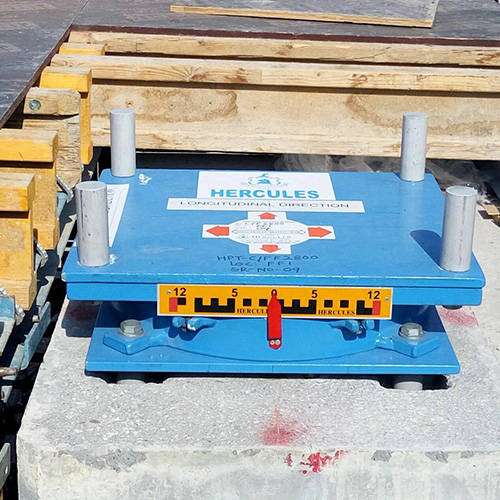
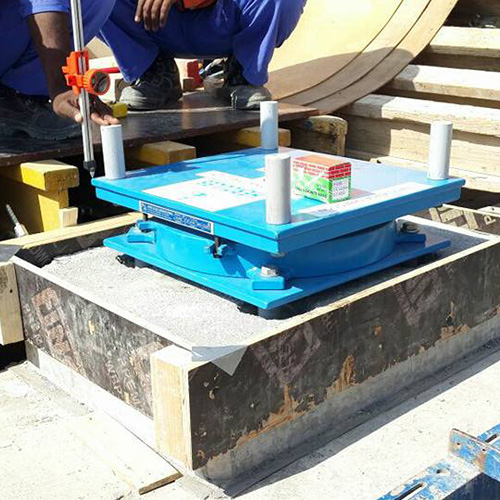
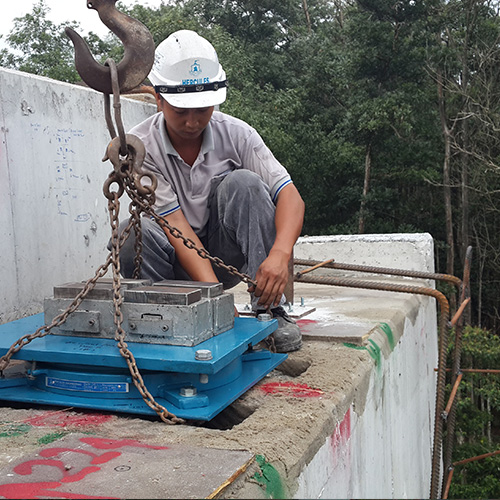
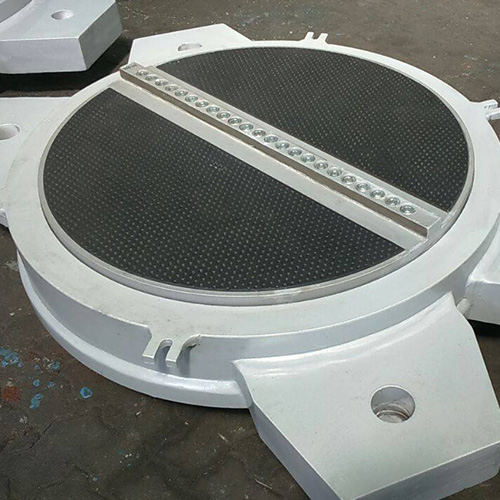
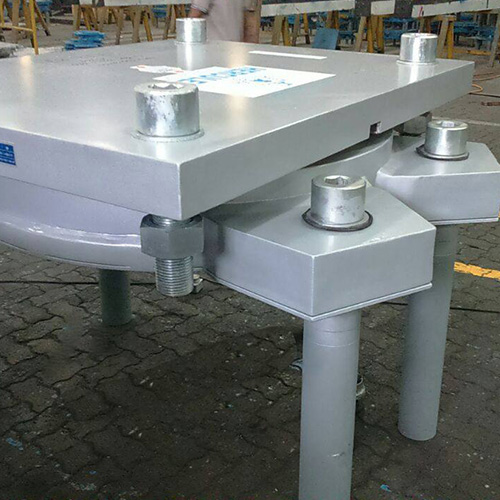
Hercules POT Bearings (HPT) deliver high vertical and horizontal load capacity while accommodating movements in multiple directions. As a result, we design these bearings for bridges, high-rise buildings, and seismic-resistant structures to ensure durability, flexibility, and long-term performance.
Hercules POT-Type Bearings – High Load Capacity & Multi-Directional Movement
The Hercules POT Bearings (HPT) are advanced structural support solutions for large-scale infrastructure projects. Because they can handle high vertical and horizontal loads while accommodating various movements, engineers widely use these bearings in modern bridge construction, high-rise buildings, and offshore platforms.
Specifically, a POT bearing features a steel pot that houses an elastomeric pad and a piston, which enables slight deformation under load. In turn, this design absorbs forces, minimizes stress, and maintains structural stability. To elaborate, the elastomer provides damping and flexibility, while the steel pot ensures durability under extreme load conditions.
Types of Hercules POT Bearings
-
First, Fixed POT Bearings (FX) restrict all movement and are therefore suitable for locations without horizontal or vertical displacement.
-
Vertical Load Capacity: 300 kN to 30,000 kN.
-
-
In contrast, Sliding Guided POT Bearings (SG) allow horizontal movement, making them ideal for thermal expansion or seismic activity.
-
Movement Capacity: ±50 mm longitudinal, ±20 mm transverse.
-
-
Furthermore, Free Float POT Bearings (FF) support multi-directional movement for the most dynamic load conditions.
-
Designers commonly use them in seismic-resistant designs.
-
-
Finally, we engineer Custom Designed POT Bearings (Series C) for non-standard load combinations, skew movements, and other unique seismic requirements.
Applications
-
In bridge construction, these bearings support decks while accommodating temperature changes and seismic shifts.
-
For high-rise buildings, they absorb forces from settlement, wind, and seismic loads.
-
Within transportation infrastructure, engineers use them in railways, tunnels, and overpasses due to their heavy load and movement capacity.
Design Features & Specifications
-
Vertical Load Capacity: 300–30,000 kN (tested at 150% rated load).
-
Rotation Capacity: 0.030 rads (small) to 0.015 rads (large), with special designs up to 0.200 rads.
-
Materials:
-
For example, the Elastomeric Pad has high tensile strength, tear resistance, and compression set performance.
-
We also bond the PTFE Sliding Pads for low friction and minimal wear.
-
Advantages
-
High Load-Bearing Capacity – Above all, they support massive vertical and horizontal loads.
-
Durability – Additionally, they are resistant to humidity, freezing, and UV exposure.
-
Seismic Resistance – Moreover, they effectively absorb earthquake forces in seismic zones.
-
Thermal Expansion Management – Similarly, they prevent structural damage from temperature shifts.
-
Low Maintenance – Ultimately, this design reduces lifecycle costs.
Related Products on Our Website: