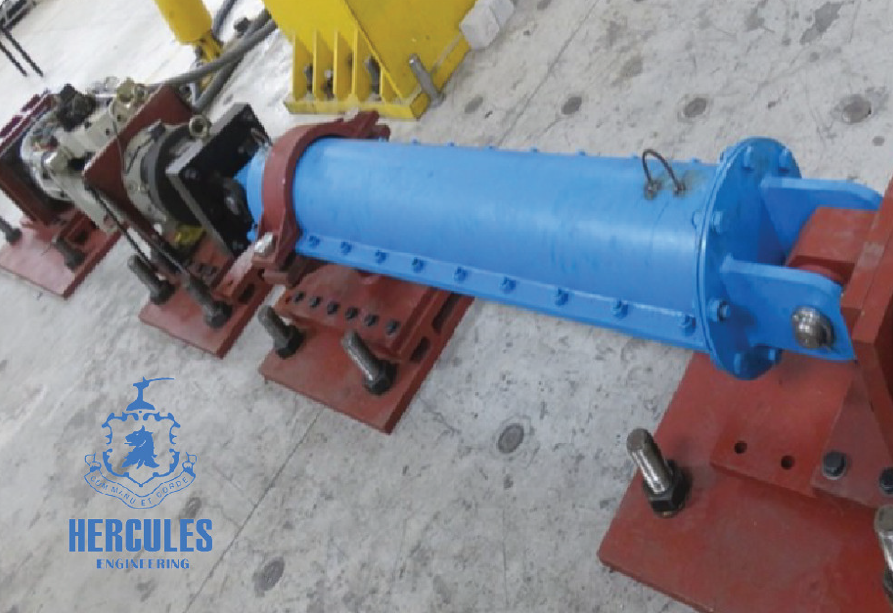
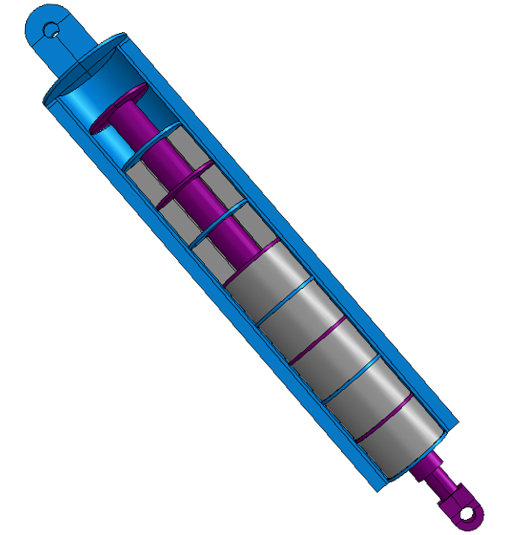

Rubber Restrainer Device
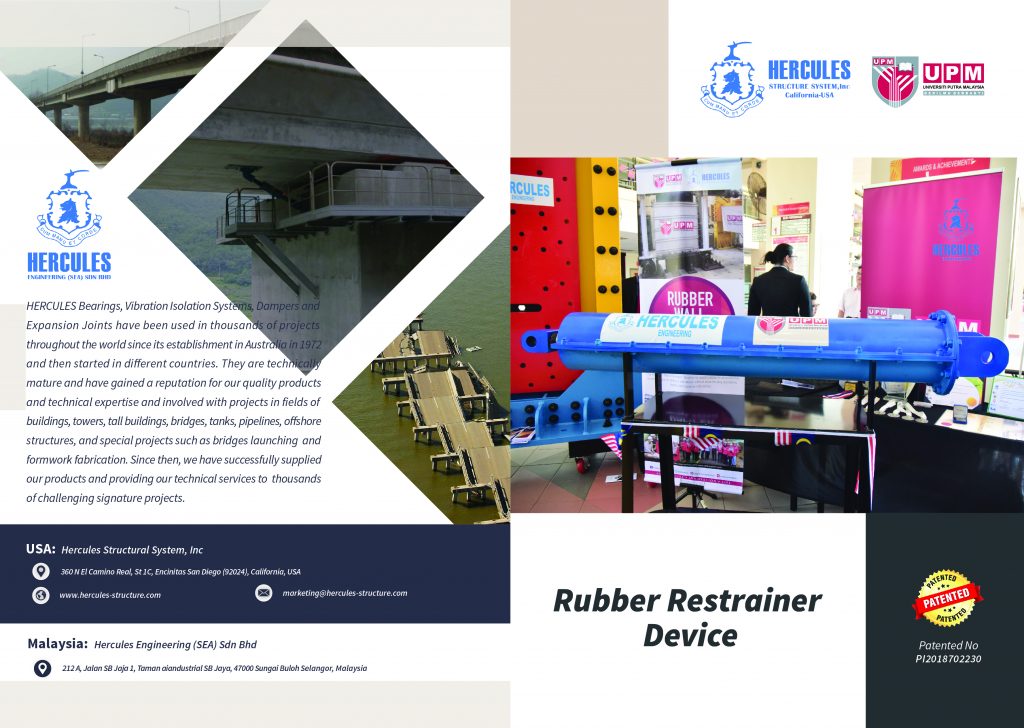
The Rubber Restrainer Device by Hercules Structural Systems delivers reliable displacement control, vibration damping, and seismic protection for bridges, buildings, industrial machinery, and transportation systems. Engineered from high-performance elastomeric materials, these devices combine flexibility and strength to ensure long-term stability and safety in dynamic environments.
Hercules Rubber Restrainer Devices – Controlled Flexibility for Structural Protection
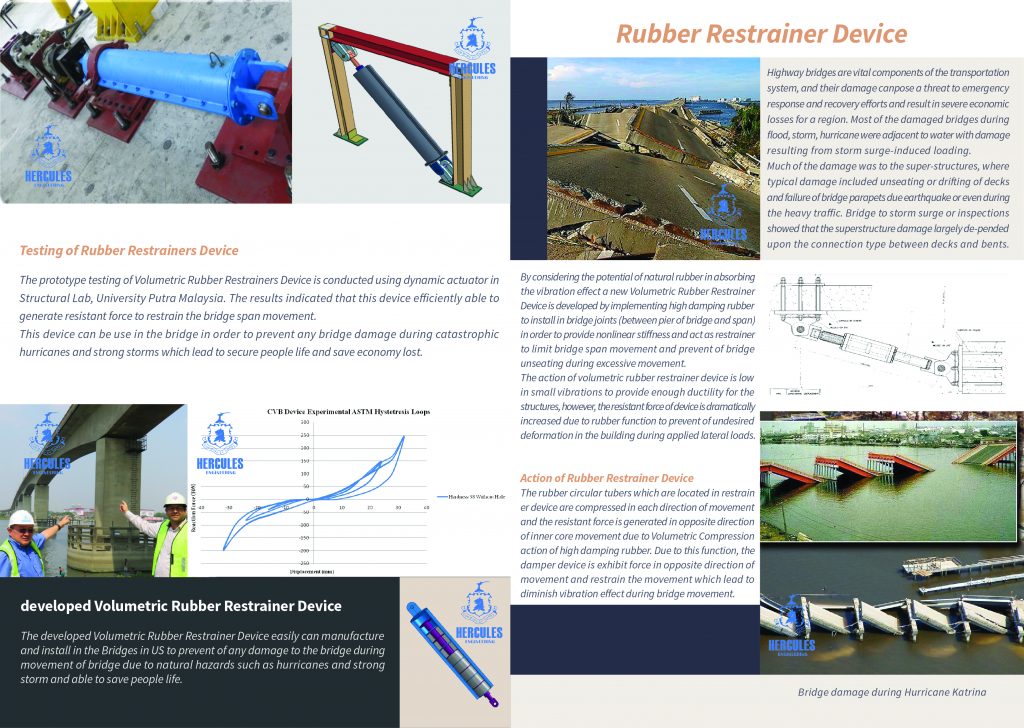
The Rubber Restrainer Device from Hercules Structural Systems is designed to limit excessive movement while allowing controlled flexibility. By using the elastic properties of rubber, these devices absorb and dissipate external forces—such as seismic activity, traffic vibrations, or mechanical loads—protecting critical infrastructure and machinery.
Unlike rigid restraints, Hercules rubber restrainers permit movement where needed, helping structures withstand dynamic loads without compromising overall integrity. This makes them essential for earthquake-resistant buildings, transportation infrastructure, and heavy-duty machinery.
How It Works
When external forces act on a structure or machine, the rubber component compresses and deforms, absorbing energy. Once the load is removed, the device returns to its original shape, restoring stability. This energy absorption and recovery process reduces stress on the connected system, extending service life and maintaining operational performance.
Types of Hercules Rubber Restrainer Devices
- Elastomeric Restrainers – Made from pure rubber for effective vibration damping and displacement control; widely used in seismic protection for bridges and buildings.
- Composite Rubber Restrainers – Reinforced with steel or fibers for enhanced strength and durability; ideal for heavy-load transportation and industrial applications.
- Hydraulic Rubber Restrainers – Combine rubber with hydraulic components for variable restraint; perfect for systems requiring adaptable load control, such as marine or heavy machinery applications.
Applications
- Seismic Engineering – Mitigates earthquake forces, allowing controlled building movement while maintaining stability.
- Transportation Infrastructure – Limits displacement in railway systems, highways, and bridges to ensure safety and reduce wear.
- Industrial Machinery – Controls part movement, absorbs vibrations, and prevents premature component failure.
- Marine & Aerospace – Reduces shocks and vibrations in ships, aircraft, and other mobile systems for improved safety and performance.
Advantages
- Controlled Movement with Stability – Provides the perfect balance between flexibility and restraint.
- High Durability – Operates reliably under extreme environmental and load conditions.
- Low Maintenance – Long-lasting performance with minimal upkeep required.
- Effective Vibration Damping – Reduces mechanical stress and prolongs service life.
- Versatile Across Industries – Suitable for construction, transportation, aerospace, and heavy machinery.
Related Products: